The Real Cost of Deferred Concrete Maintenance on Industrial Floors
3-Point Highlight
- Every year of deferred slab repair multiplies the eventual cost — not adds to it
- Forklift downtime, equipment misalignment, and chemical exposure compound the structural damage
- Phased preventive repair beats emergency reactive repair by 4–10x in true cost
Industrial concrete floors are some of the most punished structures in commercial real estate. Forklifts, pallet jacks, and equipment baseplates pound them daily. Chemical exposure attacks them seasonally. Temperature swings flex them. And yet, more than any other building system, industrial concrete maintenance gets pushed to next year’s budget — because the floor still works, until it doesn’t.
The math on deferred concrete maintenance is harsher than most facility managers expect. Repairs don’t scale linearly with time — they multiply.
The compound math of deferred slab maintenance
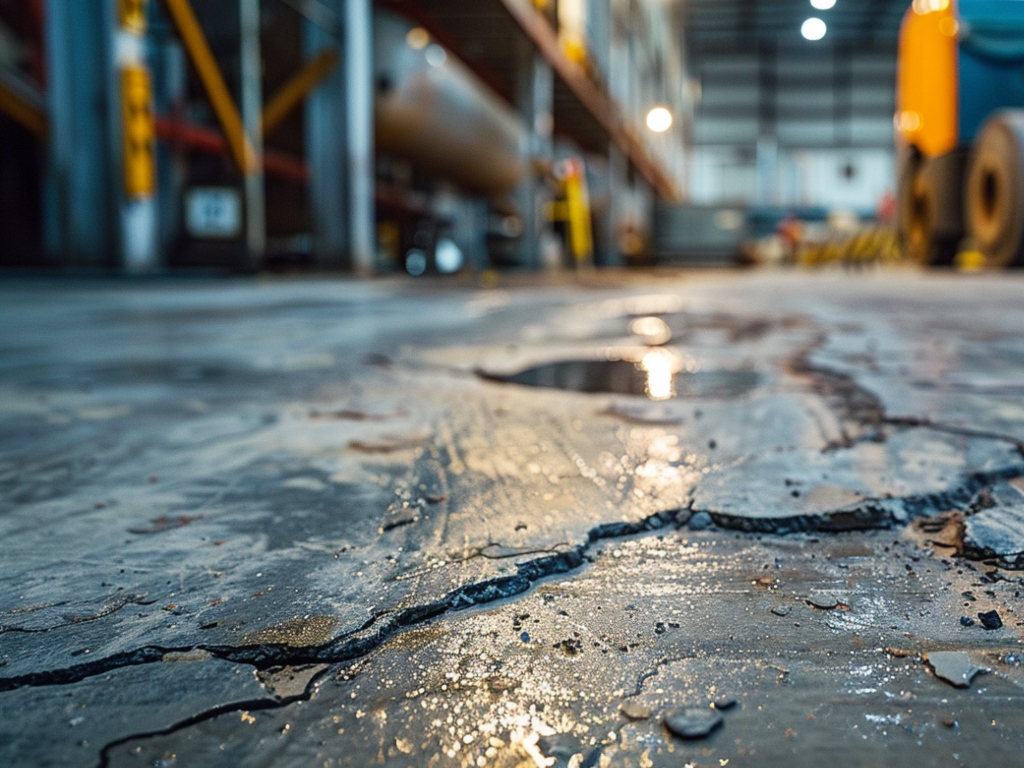
A small joint failure in year one is a half-day repair. By year three, that joint has chipped, the substrate is debonding, and the surrounding rebar has water access. Now it’s a two-day partial-depth repair. By year six, the deteriorated joint has spread to neighboring panels, the slab edges have spalled, and the trench drain is leaking. Now it’s a week-long full-depth restoration with rebar replacement.
Same defect, three different cost structures: 4 hours, 16 hours, 80+ hours of work. Plus materials. Plus production downtime that scales with the work duration. The "let’s wait until next year" decision is rarely a 1.1x decision — it’s usually a 3–5x one.
See industrial concrete servicesWhat’s actually happening when you defer
Microcracks let water and chemicals into the concrete. Water reaches the rebar. Rebar corrodes and expands — up to 6× original volume — fracturing the slab from inside. Forklifts hit the weakened concrete edge and break it further. Equipment baseplates lose their level. Process chemicals reach exposed substrate. Each of these failures is connected: address one early and the others stay frozen. Wait, and they cascade.
The most expensive industrial floors we’ve repaired weren’t built poorly. They were ignored 3–5 years too long.
The hidden costs nobody includes in the budget
Concrete deferred-maintenance budget conversations usually focus on the repair line item. The bigger costs hide in adjacent operations:
Forklift downtime. A failing slab causes wheel impacts that damage forklifts. Each forklift down is $400–$1,500/day in lost production. Equipment misalignment. Concrete movement throws machinery out of tolerance. Re-leveling production lines is expensive and often happens during the most inconvenient moment. Chemical exposure. Once the floor coating fails, the substrate absorbs whatever you spill. Some industries face EPA reporting and remediation costs that dwarf the original repair. OSHA exposure. Workers slipping on lifted slab edges or tripping on failed joints become incident reports, claims, and rate increases.
Get a phased restoration planWhen you cross from "manageable" to "expensive"
There are three thresholds where industrial concrete repair shifts from minor to major:
Threshold 1 (Year 1–2): Surface coatings and joint sealants start failing. Repair cost: low. Disruption: minimal. Threshold 2 (Year 3–5): Substrate damage begins. Partial-depth repairs needed. Cost: 3–5x. Disruption: weekend or shift work. Threshold 3 (Year 6+): Structural slab failure, full-depth repairs, equipment pad rebuilds. Cost: 8–12x. Disruption: extended shutdown windows or phased multi-week work.
Most industrial slabs deteriorate at predictable rates. The threshold you’re crossing should drive the repair budget, not the calendar.
How to plan a phased maintenance schedule
The cheapest industrial concrete program looks like this: Annual visual inspection with photo documentation. Tri-annual full assessment by a contractor who knows what to look for. 5-year capital plan with line-item cost projections per zone. Phased annual repair budget that addresses a portion of the property each year, before failures cascade.
Plants that adopt this approach typically spend less on concrete over a decade than plants that wait for emergencies — usually significantly less, when downtime and equipment damage are factored in.
Talk through a 5-year planQuick FAQ
How often should industrial concrete floors be inspected?
Annual visual checks by your facility team, plus a full assessment by a qualified contractor every 2–3 years. Heavy-traffic, chemical-exposure, or older facilities may warrant more frequent checks.
What’s the ROI on preventive concrete maintenance?
Typically 4–10x — meaning $1 spent on preventive repair saves $4–$10 in eventual emergency repair plus operational disruption. Higher in chemical or 24/7 production environments.
Can we phase repairs to avoid downtime?
Yes. Industrial slab work is routinely phased by zone, by shift, or by weekend. Rapid-set concrete materials let us return floor area to service in hours instead of days.
What’s the warning sign that we’ve waited too long?
Visible rebar in the slab surface or underside, equipment alignment problems that weren’t there last year, and forklift wheel damage that’s spreading. At that point you’ve already crossed Threshold 2.
Final Tips
- Document slab condition annually with photos — before you need them
- Phased preventive repair beats emergency reactive repair every time
- Factor production downtime into the repair-vs-defer math, not just the line item
- Address chemical exposure and forklift damage as separate failure modes
- Get a 5-year capital plan, not a year-by-year scramble

Cold Weather Concrete Repair: What Works (and What Fails) in Colorado
Colorado freeze-thaw cycles, elevation, and de-icing salts demand climate-specific materials and curing methods. Here is why generic concrete repair specs fail on the Front Range — and what actually works.
The Real Cost of Deferred Concrete Maintenance on Industrial Floors
Industrial concrete maintenance gets pushed to next year more than almost any other building system. The compound math of deferring repair is harsher than most facility managers expect.
Carbon Fiber vs. Steel Reinforcement: Which Is Right for Your Commercial Building?
Both methods restore concrete capacity — but they win in different situations. Here is how to decide between carbon fiber wrap and steel reinforcement for your commercial building.