Carbon Fiber vs. Steel Reinforcement: Which Is Right for Your Commercial Building?
3-Point Highlight
- Carbon fiber wrap adds load capacity without adding dead load or losing clearance
- Steel reinforcement is the workhorse for severe damage, large spans, and fire-rated areas
- The right choice depends on access, exposure, schedule, and clearance — not just cost
When a structural concrete member loses capacity — from cracking, corrosion, impact, or change-of-use loading — you have two main families of repair: carbon fiber reinforcement (FRP) or steel-based reinforcement. Both work. They’re engineered for different situations. Picking the wrong one is expensive in ways that aren’t obvious until years later.
What each method actually is
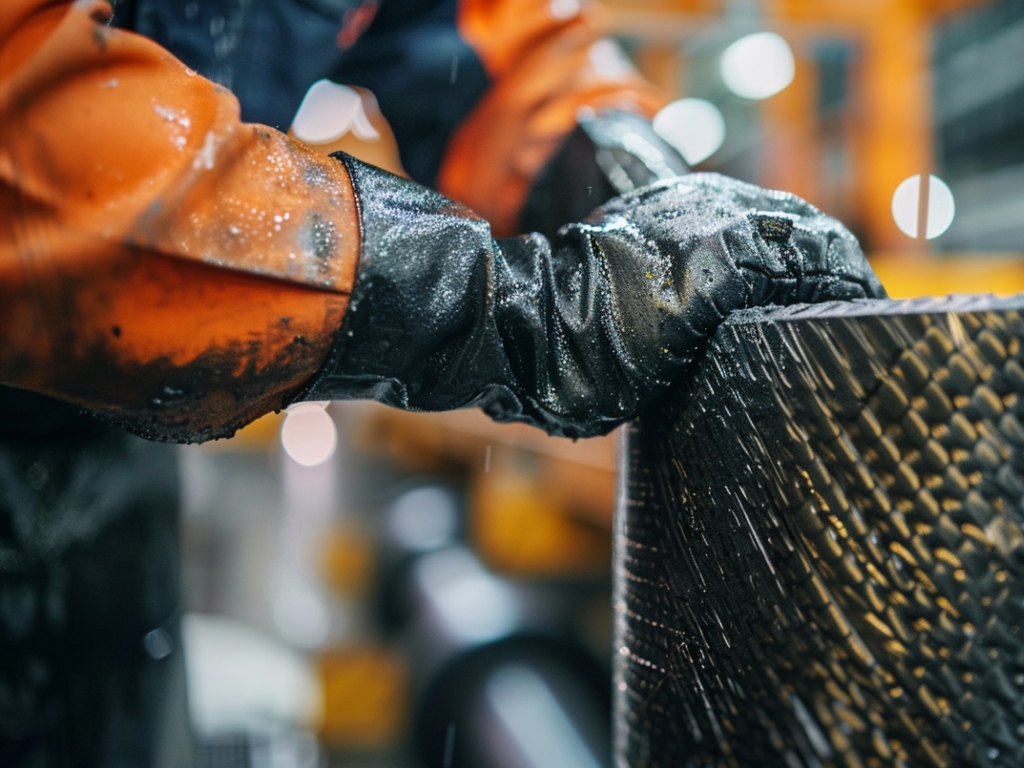
Carbon fiber wrap (FRP) is a high-strength composite fabric saturated with structural epoxy and applied directly to the concrete surface. Once cured, it bonds to the concrete and adds tensile capacity. It’s thin (a few millimeters), extremely strong in tension, lightweight, and corrosion-proof.
Steel reinforcement covers a few options: external steel plates bonded with structural epoxy, structural steel jackets around columns, supplemental rebar with new concrete jacket, and post-tensioning. All add capacity through traditional structural steel mechanics.
See our structural reinforcement methodsWhen carbon fiber (FRP) is the right call
FRP wins when you need to add capacity without adding visible bulk or weight. Specifically:
Tight clearance situations. Parking deck undersides, low overhead beams, mechanical room ceilings — anywhere that adding a 3-inch steel jacket or 4-inch concrete jacket would interfere with use. Speed. FRP installs in days, not weeks. Resin cures in hours. Critical for facilities that can’t take long downtime. Corrosive environments. Industrial chemical exposure, coastal salt air, and de-icer-heavy parking decks eat steel. Carbon fiber doesn’t corrode. Architectural sensitivity. Historic buildings or finished spaces where you can’t hide steel. FRP is thin enough to be plastered over.
When steel reinforcement makes more sense
Steel methods win when the damage is severe, the loads are extreme, or fire ratings matter. Specifically:
Severe section loss. If the concrete has lost large amounts of cross-section to corrosion or impact, FRP can’t restore the missing material — you need new concrete or a steel jacket. Large spans and high loads. Long-span beams under heavy industrial loads usually warrant steel section bonding or structural steel jacketing. Fire-rated assemblies. FRP loses strength rapidly above 200°F unless protected. Fire-rated members in industrial buildings often need steel + concrete cover. Compression members. Steel jackets are particularly effective for confining columns and short walls under axial load.
Get an engineer-backed scopeThings that affect the decision (and aren’t always obvious)
Beyond the structural call, three real-world factors push the decision:
Access. Can crews physically install the system? FRP needs surface access and clean substrate. Steel jackets need formwork space and crane access. Schedule. Is the building active? FRP wins on speed almost every time. Long-term inspection. Steel needs corrosion checks at intervals. FRP needs visual checks for delamination but doesn’t corrode.
Cost comparison: what you’re really paying for
Per-square-foot installed, FRP and steel methods are usually comparable — FRP material costs more, steel labor costs more, and the math often lands within 10–20% of each other for the same capacity gain. The bigger cost story is everything ELSE: downtime, accessibility provisions, future inspections, and finish work after the structural repair.
Don’t pick the method based on the cheaper line-item bid. Pick it based on what the building actually needs and how it will be maintained for the next 20 years.
Talk through your project with usQuick FAQ
Is carbon fiber really as strong as steel?
In tension, yes — carbon fiber tensile strength rivals or exceeds structural steel. But strength isn’t the same as capacity in every direction. FRP excels in tension and confinement; steel handles compression and complex stress states more flexibly.
How long does carbon fiber wrap last?
Properly installed FRP in protected interior environments has a service life of 50+ years. Exterior or chemically aggressive environments need protective topcoats and may shorten that window without maintenance.
Can you combine carbon fiber and steel reinforcement?
Yes — hybrid systems are common. A typical example: external steel plates added to a damaged beam for shear, with FRP wrap added for flexural capacity. The right combination is decided by the structural engineer.
Does FRP work for fire-rated assemblies?
Only with protective fire-rated coatings, and even then most building codes treat the underlying concrete as the rated element. For fire-critical members, steel-based methods with proper concrete cover are usually the safer call.
Final Tips
- Get a structural engineer involved before picking a reinforcement method
- Choose carbon fiber when clearance, schedule, or corrosion exposure are constraints
- Choose steel for severe damage, fire-rated areas, and large-span heavy loads
- Don’t pick on line-item cost alone — factor in downtime and 20-year maintenance
- Document the as-built reinforcement for insurance, lender, and future inspection records