Cold Weather Concrete Repair: What Works (and What Fails) in Colorado
3-Point Highlight
- Colorado freeze-thaw cycles destroy generic concrete repair specs in 2–3 winters
- Cold-weather-rated materials cost 10–15% more but last 3–4x longer in Front Range conditions
- Air entrainment, mix-water control, and curing time are the three failure points to get right
Concrete repair specs that work in Texas or Florida fail in Colorado. We see it constantly — out-of-state contractors win bids on price, leave perfect-looking work, and watch it crack apart in the second winter. The Front Range climate is uniquely brutal on concrete repair, and the materials and methods that hold up here are not the materials and methods you’ll find in a generic spec.
Why Colorado is uniquely hard on concrete repairs
Three local conditions stack against concrete: frequent freeze-thaw cycles (Denver averages 90–110 freeze-thaw cycles per winter, several times the count in southern climates), high elevation (lower air pressure changes how concrete cures and how chemistry behaves), and aggressive de-icing salts (chloride exposure that accelerates rebar corrosion and eats unprotected concrete).
Combine all three and you have a climate that demands climate-specific materials. Generic repair mortars, room-temp epoxies, and standard polyurethane sealants weren’t designed for these conditions and don’t survive them.
See our repair methodsThe freeze-thaw cycle: what actually happens
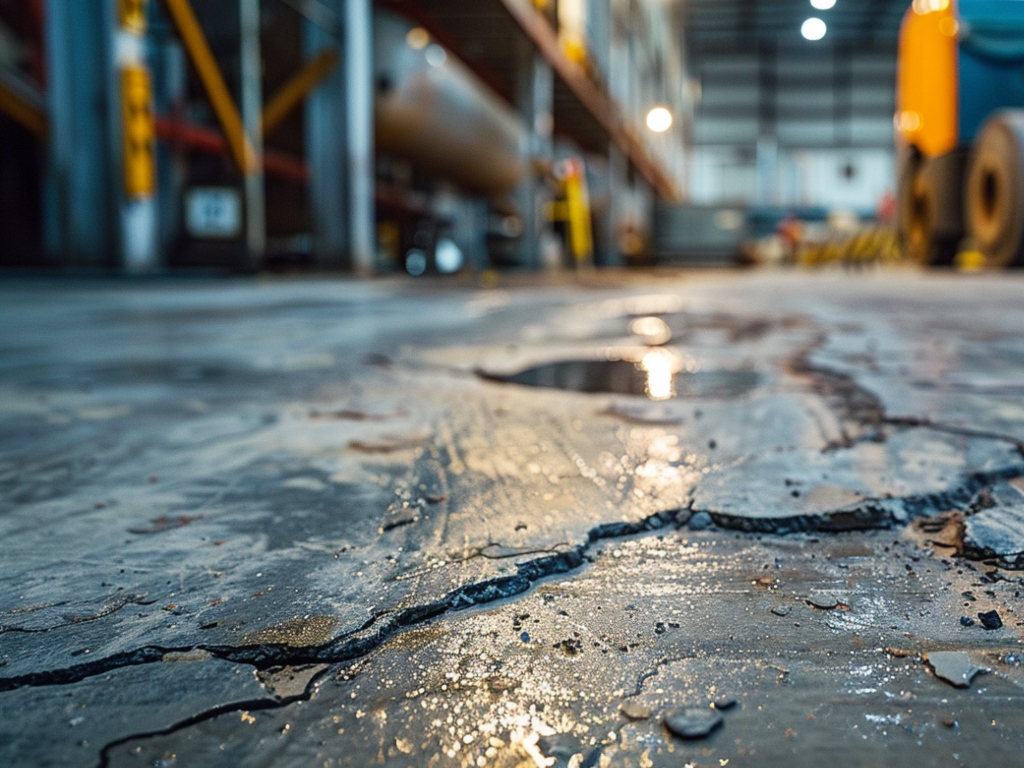
Concrete is porous. Water gets into the pore network through cracks and capillary absorption. When it freezes, it expands roughly 9% in volume. If the concrete doesn’t have entrained air to absorb that expansion, the ice fractures the matrix from inside. Thaw, refreeze, repeat. Each cycle widens the existing micro-fractures and creates new ones.
Over a Front Range winter, a single horizontal exposed surface can experience 100+ of these cycles. Multi-year accumulation produces the spalling, scaling, and surface deterioration that’s painfully familiar on Colorado parking decks, sidewalks, equipment pads, and exterior slabs.
Cold-weather material choices that actually work
The materials that survive Colorado’s climate share a few traits: appropriate air entrainment, low permeability, and chemistry that performs across a wide temperature range. Specifically:
Polymer-modified repair mortars with high freeze-thaw durability ratings — not the cheapest patch product, but the ones rated for 300+ cycles. Polyurethane sealants and crack injections handle thermal movement better than rigid epoxies in exposed environments. Use polyurethane on exterior cracks, save epoxy for protected interior structural work. Cold-weather-rated structural epoxy for injection in winter projects — standard epoxy stops curing below 40°F. Methyl methacrylate (MMA) traffic membranes for parking decks — cure to spec at lower temperatures than polyurethane and handle freeze-thaw exposure better long-term.
Parking structure systemsCuring in cold weather: blankets, enclosures, and accelerators
Concrete cures by hydration — a chemical reaction between cement and water. Below about 40°F, that reaction slows dramatically. Below freezing, it stops entirely until the concrete warms back up. Improper cold-weather curing is one of the top causes of premature concrete failure in Colorado.
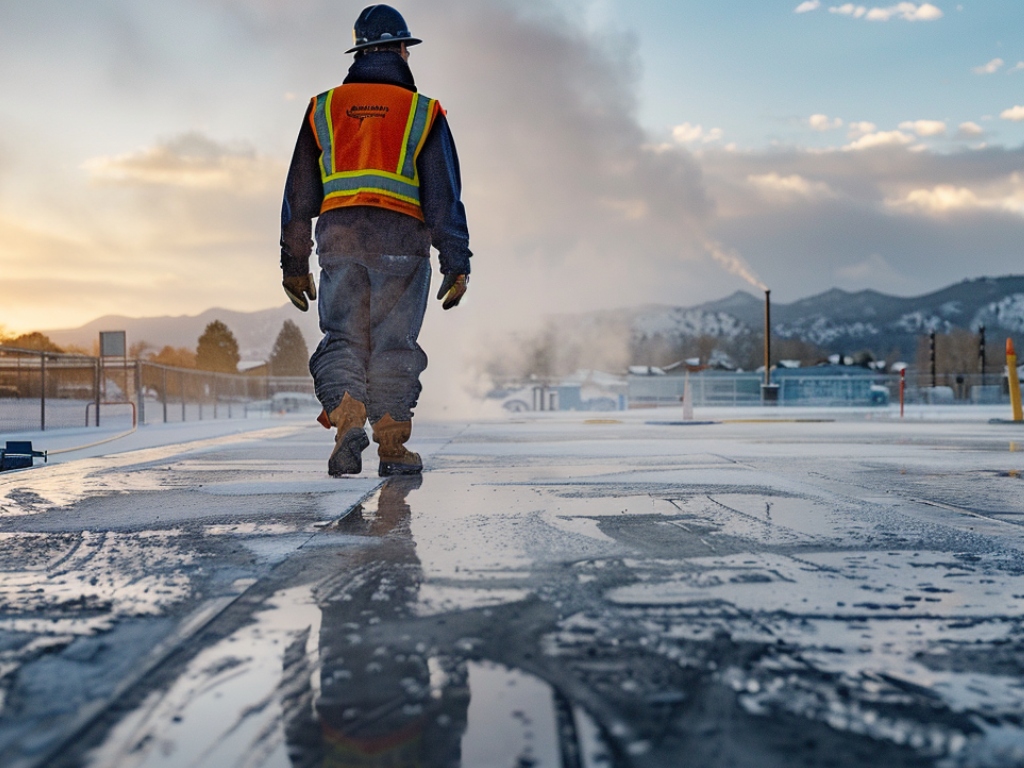
Proper cold-weather curing means: insulated curing blankets over freshly placed concrete to retain hydration heat, heated enclosures for larger pours when ambient temperatures drop into the 20s and below, chemical accelerators appropriate to the mix and exposure, and extended curing time — cold-weather concrete needs 2–3x the standard cure period before it’s loaded or exposed to weather.
Skip any of these and the concrete reaches design strength weeks late or never at all.
Common Colorado-specific failures we see (and how to avoid them)
The repair failures we get called to fix from out-of-state contractor work share patterns: scaling on parking decks from non-air-entrained surface coatings; cracking around equipment pads placed without considering thermal-cycle expansion; premature joint sealant failure from products rated for milder climates; delaminated patches where the bonding agent didn’t cure properly in cold conditions; spalling at slab edges from de-icer salt penetration into uncoated repair concrete.
All of these are avoidable. They share a root cause: specifying materials and curing methods for a climate that isn’t the Front Range. The solution is hiring contractors who know what works at 5,280 feet through 100 freeze-thaw cycles.
Get Colorado-spec repairQuick FAQ
Can concrete repair be done in winter in Colorado?
Yes — with the right materials, heated enclosures or curing blankets, and longer cure schedules. Not all repairs are appropriate for winter execution; some are better deferred to spring/fall. We assess project-by-project.
What’s the temperature limit for epoxy injection?
Standard structural epoxy stops curing below 40°F. Cold-weather-formulated epoxies cure down to about 20°F when the substrate is properly preheated. Below that, defer or use a different system entirely.
Why do out-of-state contractors’ repairs fail in Colorado?
Three reasons: they spec materials rated for milder climates, they don’t plan for elevation effects on cure, and they don’t allow enough cure time before exposure. The work looks fine when they leave and fails in the first or second winter.
How long does cold-weather curing actually take?
Standard concrete reaches usable strength in 7 days at 70°F. At 40°F it can take 14–21 days. At 30°F with proper protection, 3–4 weeks. Schedule expectations need to match.
Final Tips
- Spec materials rated for 300+ freeze-thaw cycles for any exposed Front Range surface
- Air-entrain everything that sees weather — non-negotiable in Colorado
- Plan extended curing time into project schedules; don’t accept the optimistic warm-weather spec
- Use polyurethane for exterior cracks, MMA for parking deck membranes, polymer-modified for repair mortars
- Hire contractors who understand the local climate — out-of-state specs fail predictably here
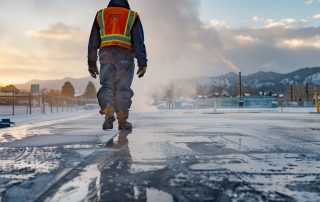
Cold Weather Concrete Repair: What Works (and What Fails) in Colorado
Colorado freeze-thaw cycles, elevation, and de-icing salts demand climate-specific materials and curing methods. Here is why generic concrete repair specs fail on the Front Range — and what actually works.
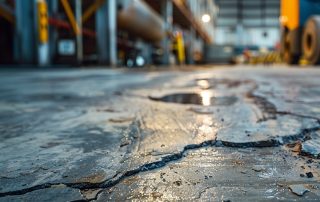
The Real Cost of Deferred Concrete Maintenance on Industrial Floors
Industrial concrete maintenance gets pushed to next year more than almost any other building system. The compound math of deferring repair is harsher than most facility managers expect.
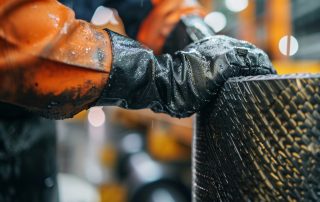
Carbon Fiber vs. Steel Reinforcement: Which Is Right for Your Commercial Building?
Both methods restore concrete capacity — but they win in different situations. Here is how to decide between carbon fiber wrap and steel reinforcement for your commercial building.