Signs Your Parking Structure Needs Repair Before It Becomes a Major Liability
3-Point Highlight
- Most parking deck failures are visible 12–24 months before they become emergencies
- Surface damage doesn’t stay surface damage — it migrates into the structural slab fast
- Owner liability climbs with every season of deferred repair, especially after freeze-thaw cycles
Across Denver, property managers and CRE owners are dealing with the same uncomfortable truth: parking structures are aging faster than the buildings they sit beside. What looks like cosmetic damage today can become a structural liability in eighteen months — especially in Colorado’s freeze-thaw climate, where water finds every crack and salt finds every piece of rebar.
How parking structures actually fail
Parking decks fail from the top down. Water and chloride salts (from snowmelt and tracked-in deicer) penetrate the wearing surface, reach the rebar, and start corroding it. As steel rusts, it expands — up to 6× its original volume — which fractures the concrete from inside. By the time you can see the spalling, the underlying steel has already lost cross-section.
This is why surface-only repairs almost never hold. If you re-coat the top without addressing the rusting rebar below, you trap moisture and accelerate the failure you were trying to fix.
See how we repair parking structuresVisible warning signs you shouldn’t ignore
Most parking structures give you years of warning before they become emergencies. The signs that warrant a structural assessment within 90 days:
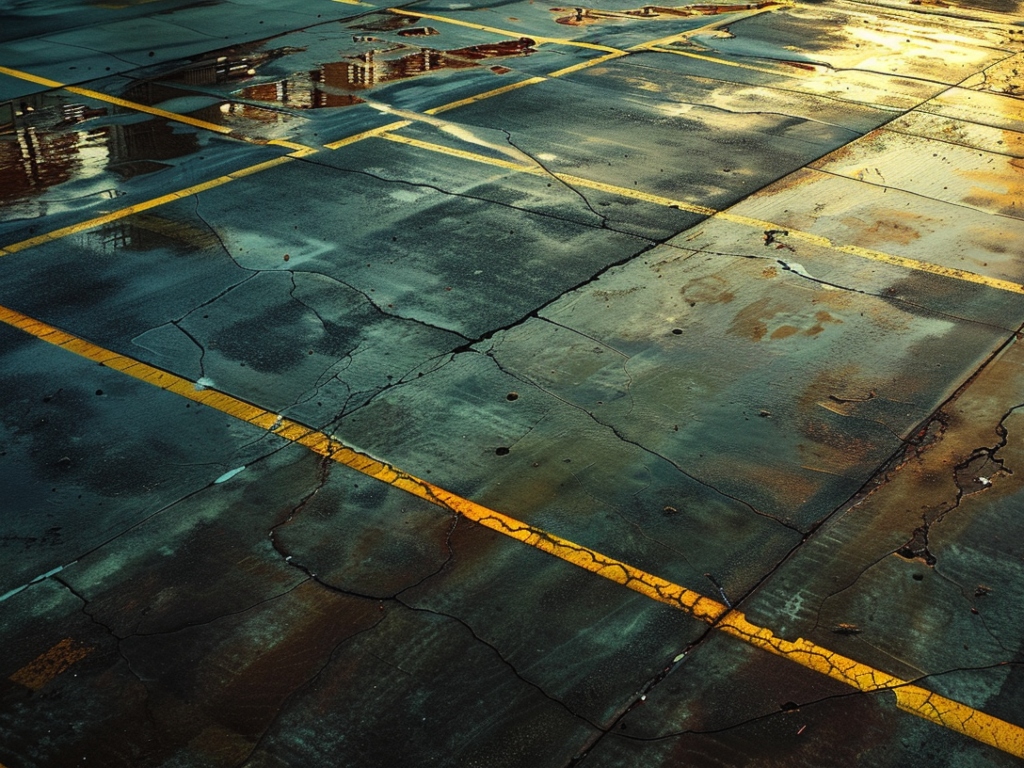
Spalling or delamination on the deck surface. If chunks of concrete are popping off, especially around drainage points or at column bases, the rebar below is already corroding. Active leaks onto the level below. Water dripping onto cars or another floor means water is making it through both the membrane and the structural deck. Failed expansion joints or sealants. Black or peeling joint material lets water into the slab and accelerates the cycle. Visible rebar in the deck underside. Exposed steel is years past the warning stage. Ponding water from failed drainage or settled slope.
Request a free assessmentWhat’s actually happening beneath the surface
By the time spalling is visible, the damage has been progressing inside the slab for years. A proper diagnostic uses three tools that go beyond visual inspection: chain-drag delamination survey (a heavy chain dragged across the deck reveals hollow areas where the bond between rebar and concrete has failed), half-cell corrosion potential testing (electrical readings that map active corrosion zones even when the surface looks intact), and core sampling (small cores extracted to verify rebar condition and chloride contamination depth).
Together, these produce a color-coded deck map showing exactly where the structure is healthy, compromised, or failed — not a guess. That map drives the repair scope.
When deferred repair becomes a liability issue
Parking structures are inspected on insurance underwriting, property condition assessments (PCAs), and refinancing diligence. A deck with active deterioration can hit any of those three review points and reduce your asset value, raise your premiums, or kill a deal entirely. It can also become an injury liability — a chunk of concrete falling on a car (or worse) is the kind of incident your insurer asks about for years.
The economic math gets ugly fast. Repairing 10% of a deck at year three costs less than 30% of the cost of repairing 50% of the deck at year seven, when the damage has spread.
Talk to us about a phased restoration planThe right order to repair (and why it matters)
Parking deck repair has a fixed sequence. Skip a step and the work fails:
1. Diagnose. Map the deck, quantify damage, identify root cause. 2. Structural repair. Concrete removal to sound substrate, rebar treatment or replacement, partial- or full-depth concrete patch. 3. Joint and sealant restoration. Replace failed expansion joints and sealants with appropriate-movement systems. 4. Traffic-bearing membrane. Apply the waterproofing system — polyurethane, polyurea, or methyl methacrylate — over clean, dry, repaired concrete. Skip the diagnostic step and you’ll patch the wrong areas. Skip the structural repair and your membrane will fail in three years. Order matters.
Quick FAQ
How often should a commercial parking structure be inspected?
Annual visual inspections by an owner or property manager, plus a full structural assessment by a qualified contractor every 3–5 years. Decks over 20 years old or showing visible damage warrant assessment more frequently.
How long does parking structure repair typically take?
It depends on scope. Targeted repairs can be done in days. Full deck restoration on a 200-stall garage typically runs 4–8 weeks, phased by level so the structure stays partially open throughout.
Can the structure stay open during repairs?
Yes — we phase work by level or bay so a portion of the parking remains in use. Full closures are rare and only used when safety requires it.
Final Tips
- Schedule a structural assessment every 3–5 years — not just visual walkthroughs
- Address deck damage in the right order: diagnose, structural repair, joints, then membrane
- Don’t apply traffic coatings over compromised concrete — you’ll trap the failure
- Document deck condition annually with photos for insurance and PCA reviews
- Plan repairs across multiple budget cycles — phased restoration is cheaper than emergency repair

Cold Weather Concrete Repair: What Works (and What Fails) in Colorado
Colorado freeze-thaw cycles, elevation, and de-icing salts demand climate-specific materials and curing methods. Here is why generic concrete repair specs fail on the Front Range — and what actually works.
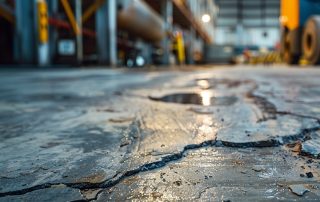
The Real Cost of Deferred Concrete Maintenance on Industrial Floors
Industrial concrete maintenance gets pushed to next year more than almost any other building system. The compound math of deferring repair is harsher than most facility managers expect.

Carbon Fiber vs. Steel Reinforcement: Which Is Right for Your Commercial Building?
Both methods restore concrete capacity — but they win in different situations. Here is how to decide between carbon fiber wrap and steel reinforcement for your commercial building.